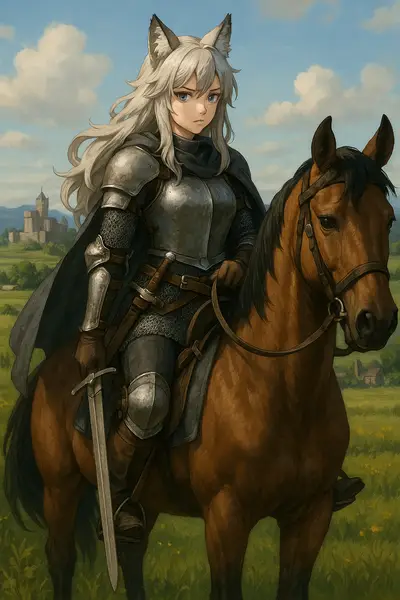
Class record
Cavalier
- Tier
- 1
- Difficulty
- 2 / 5
- Roles
- MainUtility
Entry
Requirements
None
Advancement
Progression
- UnlockKey abilityMounted BasicsUnlocks Spirit Jump
- Level 2Ability 1
- Level 3SkillsYou gain +5 skill points to spend in Athletics, Animal Husbandry, Riding, Intimidation, Perception or Common Knowledge. You can exchange any skill point for 2 expertise points, but must spend them in these skills.
- Level 4Ability 2
- Level 5HeartYou gain +1 to Fitness, Awareness or Presence.
- Level 6Ability 3
- Level 7SoulYou gain +1 to Focus, Power, Agility or Toughness.
- Level 8Ultimate ability
Identity & lore
Class overview
The origin of mounted combat and cavalry specifically has been debated among historians since nomadic riders hunted game across the Axian Plains. Cavalry, as it’s recognizably known in a more modern sense, was first organized by humans, utilizing their more advanced techniques of animal husbandry to domesticate and breed horses into mounts and beasts of burden. With their reliance on various animals for labor, humanity had a head start and also had a distinct need for increased mobility on the battlefield. With open plains and rolling hills making up a generous portion of their homeland, humans were at a distinct disadvantage in mobility to the Chimera of Northi.
In the long conflicts before the advent of Paladins, Westrian cavalry stood as the only near parity force humans could deploy against Northi and Sorthen. Light scouts and mounted archers were the primary uses of cavalry at the time to both maximize the strengths of mounted soldiers and to preserve both the precious skills of the riders and their trained mounts. While there have been many techniques surrounding cavalry over the centuries, modern understanding has codified the most basic of elements into the art of the Cavalier.
Today, the use of cavalry has spread to every corner of Lyr. No matter the type of mount, be it horse, wyvern, or even the humble dragonfly, the Cavalier lays the foundation for all cavalry techniques.
Tactical guidance
Playing Cavalier
The cavalier is a mounted combatant that excels in wide open plains. Being a tier 1 class, you get some proficiencies with Lance being the stand out one. It's a speciality weapon that can only be used while mounted, but it's effectively a polearm with a potential for increased damage. Make sure you always carry a backup weapon in case you are forced to fight dismounted.
Because mounts are such an important part of the cavalier, your mount choice will matter a lot. A horse is the most common choice (or a pony for smaller races). It is the fastest land mount, but it can only move in a straight line and has little other special qualities. The boar is the optimal choice for smaller races, as it will buff their trample and make it work against medium creatures. Wolf is the slowest of the three, but it is not restricted to line movement and has a special attack it can use. For most cavaliers, the horse is the best choice as it will make it easier to activate your Trample.
The core ability of the cavalier is Trample. It requires you to build up some speed by moving, but once you do you can trample a large amount of enemies in a single movement. It's a sure hit attack that knocks enemies prone, making it extremely punishing if it lands. It does however have some counters to be aware of. First being that you can't trample enemies that are the same size as you, so large enemies are unaffected. Secondly that the enemy can block your attack to stop it. Attempting a direct charge through the enemy tank may not work out very well.
To help with hit and run attacks, you get Canter. It must be used immediately after attacking, but it lets you sidestep 10ft which can let you move out of range of the enemy. After your out of range, you can then reposition and prepare for another charge.
Rider & Mount as one is a passive ability that lets you re-direct attacks to you instead of your mount. Mounts are not as durable as you are, so you will want to almost always use this. AoE attacks cannot be re-directed with this, so be careful of those. It also doesn't work if you're using a flying mount, so you'll want to stick with land based ones.
Horse Whistle is what you can use to get your mount back to you after you're dismounted. This lets you use other abilities such as Faerie Flash or abilities from other classes to temporarily get off your mount without having to walk back to it.
Spirit Jump can be used as an anti-air tool, but it can also be used to help your mount maneuver across difficult terrain such as cliffs or wide pits.